Metroid - Captive

Introduction
There is a whole online community out there that specializes in hacking old video games. These people can add new graphics, music, level designs and characters to many of the titles you played as a kid, and thus create a whole new experience.
In some ways; this area of game design should be one of the most productive – there are numerous editors out there to help new hackers on their way, as well as tomes of ASM hacking guides, game-specific information, and hardware specs. And of course – the prospect of releasing your own installment of a Mario, Zelda, or Sonic game is arguably as attractive as creating an original title in the first place.
But the world of ROM hacking is a particularly dark one. The vast majority of announced hacks never get completed, and – even when they do – the quality of releases is generally low. There are several reasons for this, but they all tend to linger around one fundamental issue: hacking is really hard!
Despite the abundance of the aforementioned resources, they are only of use in the right hands. The hobby seems to attract more than its fair share of novices; few of whom enter the arena having developed games in the past. So there is this perennial immaturity about the scene with a lot of well-meaning – albeit completely mislead and unprepared – newcomers.
The remainder of the scene is the opposite; containing very experienced programmers who have gone to great lengths to understand long-abandoned game consoles and machine code. Often times it feels like there are two opposing fronts colliding in this community, and when they meet a storm is imminent.
Reflection
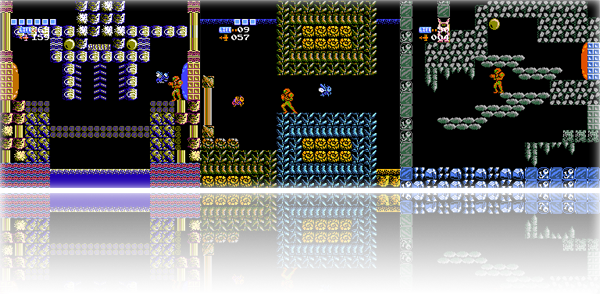
I stumbled across the scene one way or another in 2004, and was immediately struck by the prospect of creating my own hack. In retrospect; I had exactly the same expectations as many freshmen: I wanted to change the levels around, add my own graphics via a tile editor, and completely avoid learning any assembly language. In other words I wanted to stay in my comfort zone, and – if more was needed – a veteran was going to have to help me out.
With this in mind I knew I needed to hack a game that was well documented, and already had a level editor available for it. I was also keen to select a well known game which hadn’t been hacked to its potential in the past... allowing me to make a big impression with my first attempt.
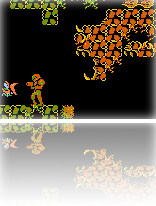
I decided on the NES version of Metroid as there was already an outstanding editor available for it in the form of ‘MetEdit’. Similarly; while there were some decent Metroid hacks out there at the time, I didn’t feel that any of them reached the high standards of Zelda: Outlands or DahrkDaiz’s Mario Adventure. I considered this my chance to complete a trilogy of sorts.
I remember approaching the hack with great enthusiasm having recently discovered the wonderful ‘TileMolester’ by SnoBro. This tool allowed me to open up the game and insert hand drawn replacement graphics with great ease. In conjunction with the level editor - Captive got off to a flying start.
The honeymoon was short lived, however, as the fall-out of using these powerful ‘corner-cutting’ tools caught up with me. The biggest problem was in my lack of preparation before-hand: I had invested virtually no time considering the architecture of the game map, and Captive was turning into a sprawling adventure surpassing the original in size. Though this is never excusable in any major design; I will say in my defence that the transition from experimentation to full-on development was especially blurred with this project.
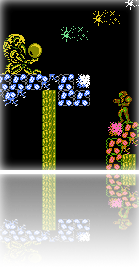
One of the most prominent features in Metroid’s design is the re-use of screens. The same rooms are often recycled several times to save memory, and this meant that my hack had to accommodate the same restriction. I spent countless hours carefully crafting a room’s layout, only to find that the same room existed elsewhere in the game and was now impeding progress in that area. It was like trying to forge a giant puzzle with no idea of the desired outcome while manipulating ever-changing component pieces.
For about half the game’s development time, I worked under the impression that while one could change the room type of an already existing screen, one could not create a room ‘from scratch’ in a blank area of the map. This misconception was unfortunate as it denied me a lot of freedom in the first half of the game’s creation, and was brought about by an omission in MetEdit’s otherwise stellar documentation.
Later in the project it became clear that I was going to have to move away from the confines of the level editor if Captive was going to continue evolving. I needed to make more precise alterations to platform layouts and enemy numbers than MetEdit would allow, and so I scoured the web in search of all the Metroid documentation I could get my hands on.
On the back of this documentation and my own findings, I proceeded to inch through the ROM in a hex editor; painstakingly experimenting with different values to meet these ends.
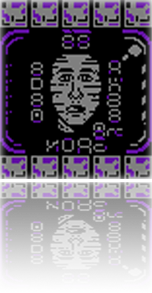
Any hopes I had harbored of avoiding any ‘real’ hacking were evaporated by this time, though the results would ultimately justify the effort. I managed to generate enough new doors and enemies to bring better balance to the later areas of the game, as well as switch a few items and platform strcuctures around.
I would return to hex editing later in the game’s life to input new text and a title screen. In all, I spent quite a long time redesigning the game in this rudimentary fashion.
The game took me around three months to complete and was a twelve hour a-day commitment from the off. Because I did every thing myself – including beta testing – I became too accustomed to the game design, and unknowingly made Captive far, far too hard. If I had the chance to remake this game, I would make it about 1/5th the size – requiring no more than 40 minutes to complete – and generally much easier to play.
It is a strange phenomenon that almost all hacks are too hard for most players, unnecessarily compromising otherwise good design. So… if you are thinking about getting into hacking on the back of this article - please learn from my mistakes and lean towards a more forgiving difficulty curve. Most players just don’t have the same amount of free time as when they were a kid, and will soon lose interest if they can’t make progress quickly. Above all else, I hope you take this point away from the article.